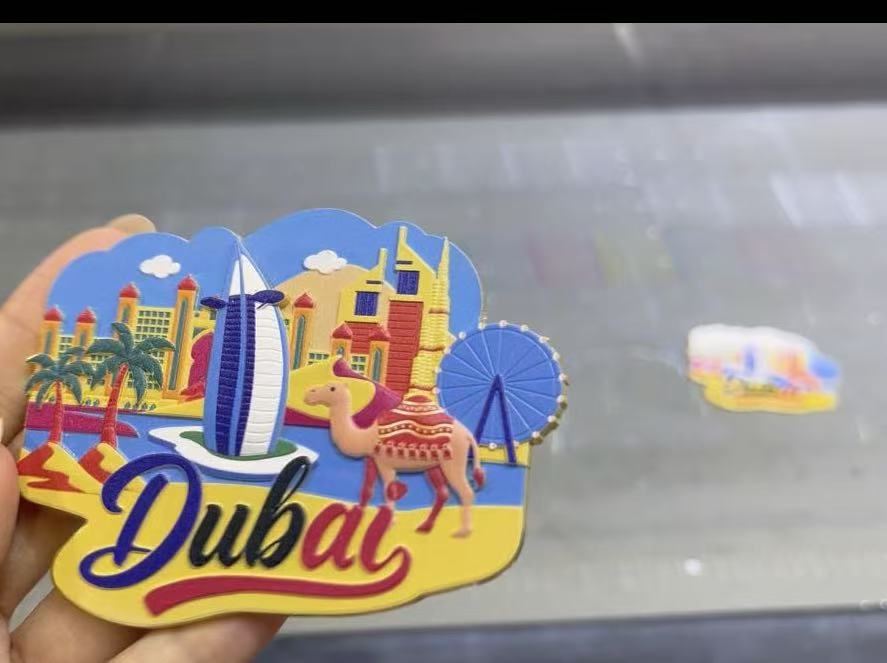

Before Printing: Intelligent Scanning and Visual Positioning
This is the core difference from traditional UV printing. Before printing, the vision system on the device (using a "cannon-type" camera) performs a high-speed scan of the material placed on a 2.5m x 1.3m work platform.
1. Image Acquisition and Processing: The system acquires raw images of the material and performs enhancement, filtering, and edge detection using built-in algorithms to extract clear outlines and positional features.
2.Automatic Recognition and Alignment: The vision system uses the extracted feature information for positioning calculations, automatically recognizing the material's position, shape, and angular deviations. Even if the material is randomly placed on the worktable, the system can achieve precise matching, eliminating the need for traditional manual layout and positioning frame processes.
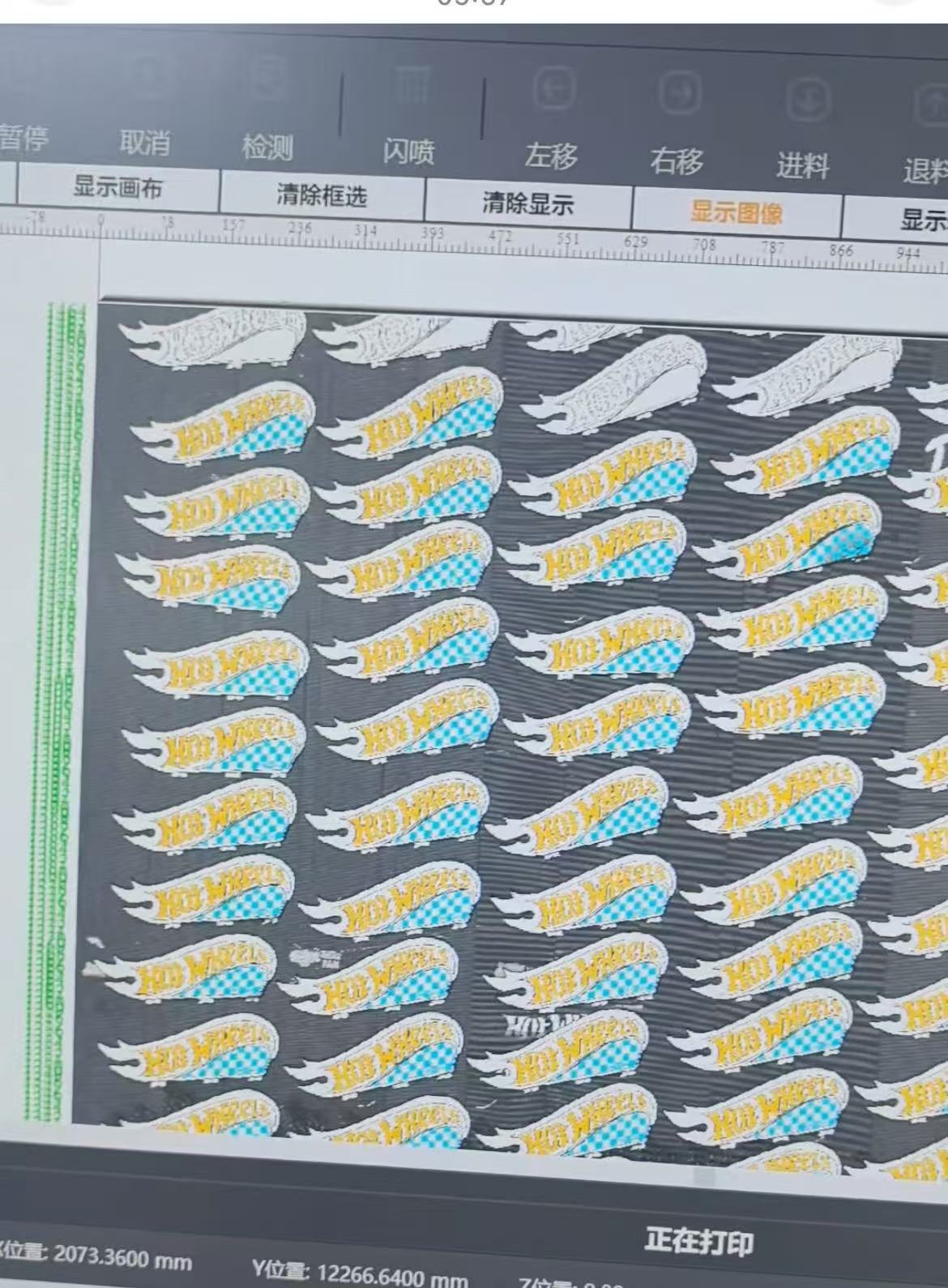
Printing in progress: High-precision inkjet printing and effect presentation
After positioning is completed, the equipment performs printing based on the generated printing data. This step determines the final image quality and visual effects.
1. Industrial-grade printhead configuration: The equipment typically features industrial-grade printheads such as the Ricoh G6, enabling high-resolution printing up to 1800 DPI, ensuring clear rendering of complex patterns and tiny text. Printing speed can be adjusted according to accuracy requirements, for example, reaching approximately 25㎡/h in 4-pass mode.
2. Simultaneous white, color, and varnish application with 3D embossing effect: This is a key feature of the printing process. Through simultaneous printing of white ink (base coat), color ink (color rendering), and varnish (protection and brightening), not only is color saturation enhanced on dark or transparent materials, but the embossed 3D effect is also improved. Furthermore, some models support eight-color configurations (such as CMYKLcLm+W+V), achieving a wider color gamut and smoother color gradations.
3. Intelligent error compensation: During printing, the vision system, in conjunction with intelligent algorithms, compensates in real-time for errors caused by minute material movements or deformations, ensuring accurate pattern placement.
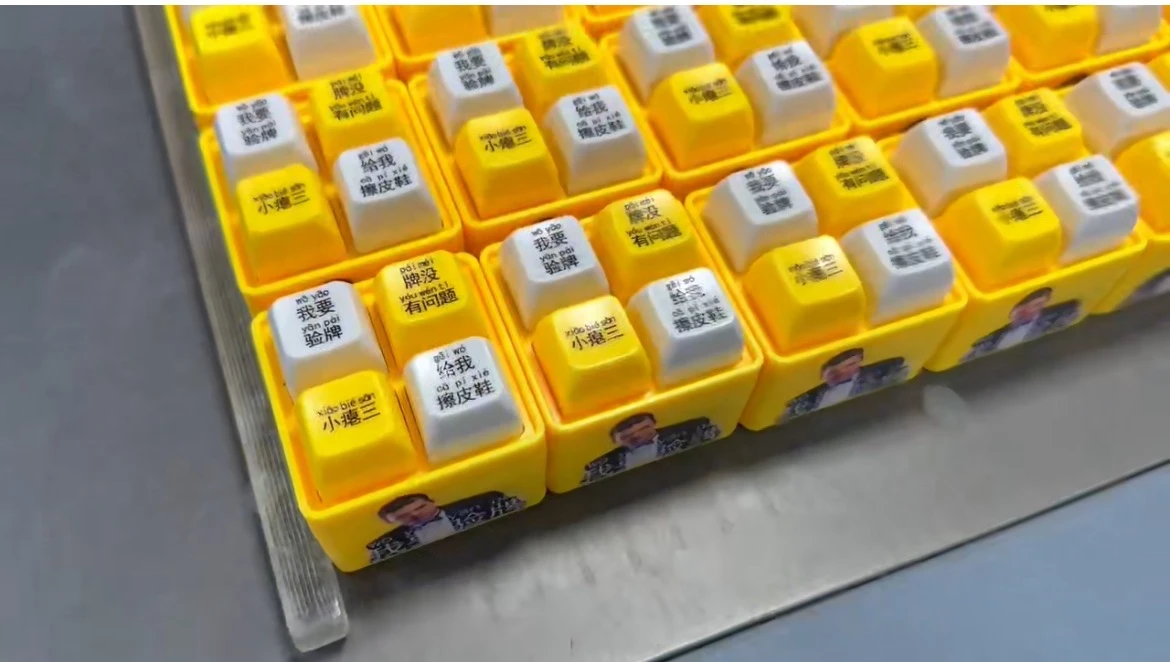
·
After printing: UV-LED instant curing
Once the ink is sprayed onto the material surface, the UV-LED curing lamps on both sides of the printing carriage immediately emit ultraviolet light to irradiate the ink.
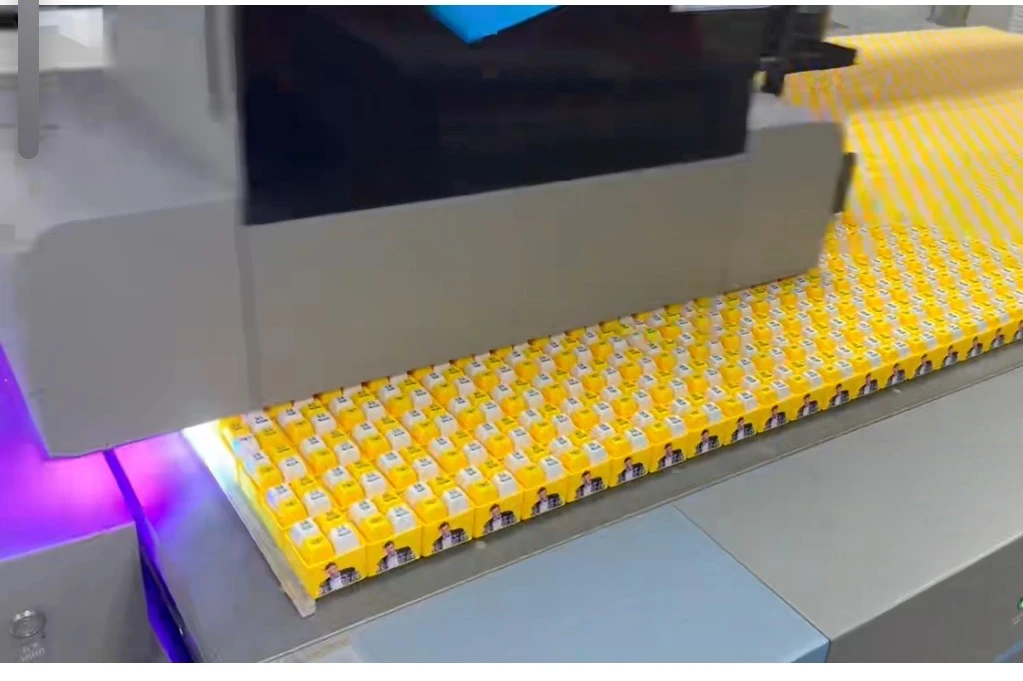
1. Instant curing via photosensitive reaction: The photosensitive agent in UV ink is activated under ultraviolet light, triggering a chemical reaction that transforms the ink from a liquid to a solid state within seconds.
2.Process advantages: This "print and dry" process not only significantly improves production efficiency and avoids the drying time of traditional printing, but also ensures that the image remains vibrant and does not peel off.
Application industries
This process combines high-precision recognition with efficient printing, making it particularly suitable for small-batch, multi-variety, and irregularly shaped orders, such as anime merchandise, medals and badges, cultural and creative accessories, and personalized gifts. The visual positioning system combined with UV curing not only improves yield and product added value but also provides a flexible technical solution for customized production.