


As orders in the advertising signage, decorative panel, and custom gift industries become increasingly diverse, many processing plants face challenges in selecting the right equipment: Both UV flatbed printers and UV hybrid printers are types of UV digital printing equipment, but they differ significantly in terms of compatible substrates and production modes. Drawing on numerous real-world customer case studies, Dongguan Yifang Digital Technology presents this procurement comparison guide for UV flatbed printers and UV hybrid printers to help businesses select the appropriate printing equipment based on their order structure.
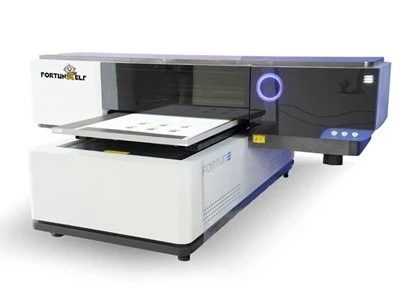
Basic Equipment Structure and Key Differences
UV flatbed printers feature a fixed flatbed worktable and are primarily used for printing on rigid, flat materials. They can reliably process thick substrates such as acrylic, wood panels, metal sheets, and glass. UV hybrid printers are dual-purpose machines capable of handling both flatbed and roll-fed materials; they can print on rigid panels as well as directly on flexible roll materials, such as PVC film, lightbox fabric, and soft film. Both types of machines are equipped with high-precision printheads and use UV printing ink, relying on UV light curing to achieve instant drying-no waiting for the ink to air dry is required.
Comparison of Suitable Production Scenarios
The UV Flatbed Printer is better suited for factories that primarily handle thick panels and rigid workpieces. It specializes in large-format flat signage, decorative panels, and craft processing, allowing multiple panels to be loaded at once and offering greater stability when processing thick materials. The UV Hybrid Printer is ideal for businesses with mixed order types, handling both panel and roll-material advertising orders. A single machine can handle both types of work, saving floor space. If a customer has both roll-fed advertising and sheet-fed signage orders, the UV Hybrid Printer offers greater operational flexibility; however, if the focus is on processing thick sheets, the UV Flatbed Printer has distinct advantages.
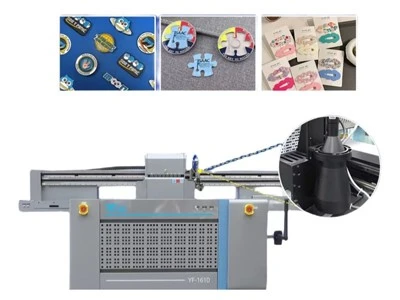
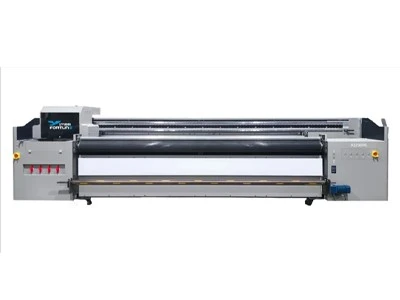
Considerations Regarding Production Capacity, Operations & Maintenance, and Procurement Costs
In terms of production capacity, the UV Flatbed Printer is optimized for thick panels and delivers stable printing accuracy on thick materials; the UV Hybrid Printer requires mechanical adjustments to switch between flatbed and roll-fed modes, resulting in slightly lower efficiency for continuous, high-volume production of thick materials compared to the UV Flatbed Printer. Regarding procurement, the UV Hybrid Printer's dual-purpose design results in a higher initial investment, and its roll-fed drive components require regular maintenance. Dongguan Yifang offers customers sample printing tests using original manufacturer printheads and UV printing inks, thereby reducing the risk associated with future consumable replacements.
Recommendations for Model Selection and Implementation
Before selecting a model, companies should first assess their order types, material thicknesses, and annual production volume. If orders consist primarily of rigid panels, a UV flatbed printer is the preferred choice; if both roll-fed and panel orders account for a significant portion of production and the company aims to expand its product portfolio, a UV hybrid printer is the better option. In addition to supplying equipment, Dongguan Yifang Digital Technology offers one-stop services including equipment commissioning, operator training, and consumables support to help factories achieve a smooth start to production.
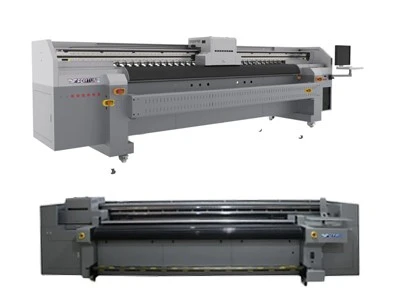
In summary, there is no absolute superiority between UV flatbed printers and UV hybrid printers; the key lies in matching the equipment to your specific order structure. A reasonable selection can improve production efficiency, reduce equipment downtime, and help advertising and custom printing companies enhance their market competitiveness.


