


In today's rapidly evolving printing industry, selecting the right digital printing equipment directly determines a company's production efficiency and market competitiveness. From DTF printers to UV flatbed printers, and from eco-solvent printers to sublimation printers, a wide variety of technologies are flourishing. This article will provide a systematic overview of these mainstream solutions, focusing on their principles, applicable scenarios, and core components.
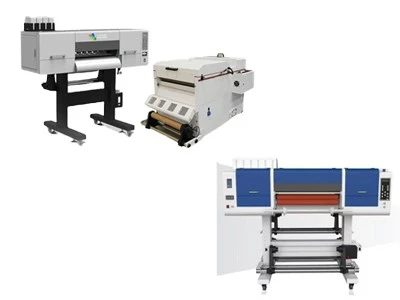
DTF (Direct-to-Film) printers have become the star of the custom apparel industry in recent years. The process involves first printing the design onto a specialized PET film, applying heat-melt adhesive powder, and then, after drying, transferring the design to the fabric using a heat press. After transfer, the design is soft, resistant to cracking under tension, and washable, making it particularly suitable for textiles such as T-shirts, denim, canvas bags, and pillows.
UV DTF, on the other hand, uses UV-curable ink to cure the design onto an AB film, which is then applied via cold lamination to hard, non-absorbent surfaces such as glass, metal, acrylic, ceramic, and plastic bottles. UV DTF requires no heat and offers good adhesion to curved and irregularly shaped surfaces. However, UV DTF is not suitable for fabric-the cured ink layer lacks elasticity and will crack upon bending. Therefore, if your business focuses on apparel, a DTF printer is the preferred choice; if you deal with gifts, signage, or the decoration of daily necessities, UV DTF is more appropriate.
UV Series: Choosing Between Flatbed, Roll-to-Roll, and Hybrid Models
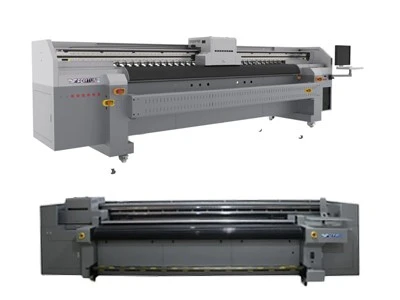
UV flatbed printers are designed specifically for rigid substrates and can print directly onto flat surfaces such as acrylic, wood, glass, and metal sheets. They offer high precision and a thick ink layer, and are commonly used for advertising signage, decorative art, and industrial part marking.
UV roll-to-roll printers, on the other hand, are designed for flexible roll materials, such as lightbox fabric, vehicle wraps, and mesh fabric, and are suitable for large-format continuous production of outdoor advertising and trade show posters.
UV Hybrid Printers ingeniously combine the two, allowing a single machine to accommodate both flat panels and roll media, providing tremendous flexibility for businesses with diverse product lines. However, hybrid models typically fall short of dedicated machines in terms of speed and print width. Startups or prototyping centers may opt for hybrid models, while large-volume production is best served by dedicated machines tailored to specific needs.
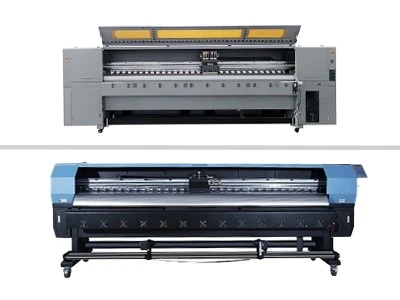
Eco-solvent printers use mild, eco-friendly low-solvent inks that deliver vibrant colors at a moderate cost, making them suitable for indoor photo prints, lightbox graphics, and short-term posters. Starfire solvent printers, on the other hand, are equipped with high-performance Starfire printheads featuring variable droplet technology and recirculating ink supply systems. These offer significantly faster print speeds and superior outdoor weather resistance, making them ideal for high-speed, high-volume production of outdoor advertisements.
In the textile sector, Sublimation Printers use heat transfer to infuse dyes into polyester fabrics, resulting in highly saturated colors and excellent colorfastness; they are widely used for sportswear, flags, and home furnishings. Digital Textile Printers, on the other hand, support direct printing on natural fibers (cotton, linen) and blended materials. When paired with pigment or reactive inks, they meet the demand for small-batch, diverse, and personalized production.
Core Components: The Decisive Role of the Printhead and Printing Ink
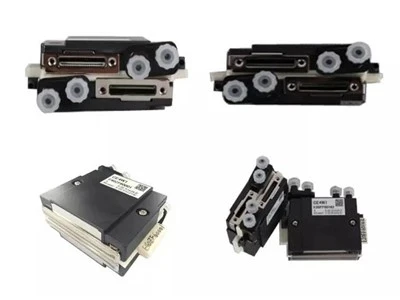
The printhead is the heart of the equipment; whether it uses piezoelectric or thermal inkjet technology determines droplet size, ejection frequency, and compatible media. Printing ink must be perfectly matched to the printhead; otherwise, it can cause clogging or ink starvation. Common ink types include pigment-based, dye-based, UV-curable, and solvent-based, each suited for specific applications.
The CCD Visual Position UV Printer and High-Speed UV Cylinder Printer represent intelligent extensions of the underlying technology: the former achieves precise registration on irregularly shaped workpieces through visual positioning, while the latter is specifically designed for cylindrical objects, balancing speed and precision. Dongguan Yifang Digital Technology specializes in the full range of these equipment types and offers one-stop technical solutions-from printhead configuration to printing ink selection-to help customers achieve stable mass production.


