


Walking into a sporting goods store in 2026, have you noticed that the patterns on athletic wear are increasingly vibrant and rich in depth, yet they don't fade easily after washing? The widespread adoption of digital heat transfer technology has played a pivotal role in this transformation. According to a white paper jointly released by Epson and International Data Corporation (IDC), the installed base of digital heat transfer printers in Southeast Asia is projected to double from fewer than 1,500 units in 2017 to over 3,000 units by the end of 2025. Furthermore, companies investing in digital heat transfer have achieved revenue growth eight times that of their peers relying solely on traditional screen printing. This overwhelming efficiency gap has made digital heat transfer a core force in the global textile printing industry that cannot be ignored. Unlike traditional screen printing, which requires large production runs to offset plate-making costs, digital heat transfer equipment enables true small-batch, on-demand production, maintaining high efficiency even for runs as small as a single piece. Today, more than three-fifths of print service providers have begun leveraging this technology to expand their customer base. From event organizers and brand owners to fabric designers, thermal transfer printing is reshaping business models across the entire industry chain.

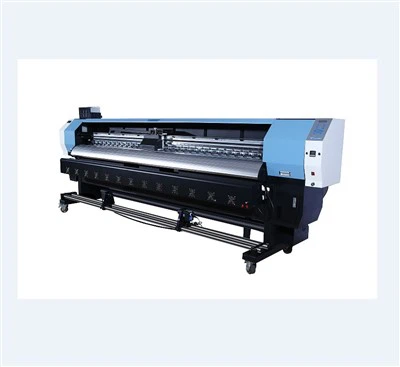
In real-world production scenarios, thermal transfer technology in 2026 is no longer limited to T-shirts and sweatshirts. At FESPA Global Print Expo 2026, Epson showcased a compact desktop dye-sublimation printer, further enhancing its portfolio of small-format professional printing solutions to meet the booming global demand for apparel customization. Meanwhile, the application boundaries of the heat transfer printing market continue to expand into home goods, footwear, and textile labels-surveys indicate that 36% of suppliers have already entered the home goods sector, while 33% have expanded into footwear printing. Catalyzed by the sports boom and the evolution of outdoor lifestyles, more than four-fifths of print service providers serve the apparel and sportswear markets, with polyester garments-particularly well-suited for heat transfer-enabling mass customization. Compared to traditional printing, digital heat transfer eliminates many intermediate steps, significantly shortening lead times. This allows brands to launch collaborative or limited-edition sportswear without first stockpiling massive inventories, instead producing in batches based on real-time orders. More than half of the surveyed suppliers indicated that this ability to respond quickly and handle complex customization has significantly enhanced the overall customer experience.
The plate-free printing and on-demand production enabled by heat transfer printing have drastically reduced the high inventory levels and material waste traditionally associated with the textile industry, making it an excellent practice for advancing environmental sustainability strategies. In the midst of the digital revolution, heat transfer technology has not only unleashed designers' creativity but also turned every purchase into an act of personal expression. Even a simple hoodie on the street has become a one-of-a-kind item thanks to this technology.


