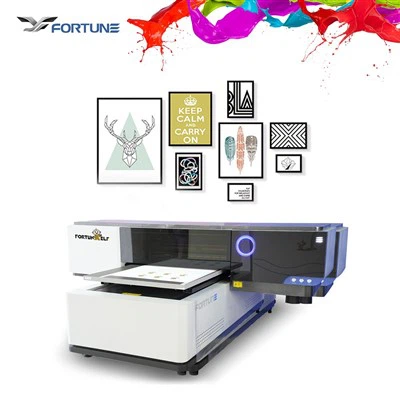


UV Flatbed Printers for Wood Printing: Applications and Advantages
UV flatbed printers have revolutionized wood printing by enabling high-quality, durable, and customizable designs on various wooden surfaces. Here's how they enhance wood-based applications:
1. Key Applications
Home Décor & Furniture: Print intricate patterns, textures, or photographic images directly on tables, cabinets, doors, and wall panels.
Signage & Displays: Create eye-catching wooden signs, exhibition stands, and retail displays with vibrant colors.
Art & Craft: Produce custom artwork, engravings, or personalized wooden gifts (e.g., photo panels, nameplates).
Architectural Models: Print detailed designs on wood for prototyping or scaled architectural presentations.
2. Advantages of UV Printing on Wood
Direct Printing: No pre-treatment (e.g., priming) required for most woods (e.g., MDF, plywood, solid wood).
High Durability: UV-cured inks resist scratches, fading, and moisture, ideal for indoor/outdoor wooden use.
3D & Tactile Effects: Layer white ink or varnish to create raised textures (e.g., wood grain simulation, Braille).
Fast Turnaround: Instant drying allows immediate handling or assembly post-printing.
Eco-Friendly: Water-based UV inks minimize VOC emissions compared to solvent-based alternatives.
3. Technical Considerations
Surface Smoothness: Smoother woods (e.g., sanded MDF) yield sharper prints; rough surfaces may require a primer.
Ink Adhesion: Some oily woods (e.g., teak) need plasma treatment for optimal ink bonding.
File Preparation: Vector designs (e.g., logos) work best for crisp edges; high-resolution images (300+ DPI) ensure photo realism.
4. Future Trends
Smart Wood Products: Integration with IoT (e.g., printed conductive inks for touch-sensitive wooden interfaces).
Sustainable Practices: Combining UV printing with reclaimed wood or biodegradable coatings.
Current Functional Analysis
1. Multi-Material Compatibility
UV flatbed printers can print directly on 300+ materials, including:
Rigid materials: Glass, metal, acrylic, ceramic, wood
Flexible materials: Leather, textiles, PVC, soft films
Special substrates: Electronic panels, automotive interiors, packaging materials
This versatility makes them widely applicable in signage, home décor, and industrial manufacturing.
2. High Precision and Color Reproduction
Resolution up to 1200 dpi (e.g., Epson SureColor series) enables photographic-quality output, suitable for premium markets like luxury packaging and art reproduction.
AI color management technology (e.g., Anker eufyMake E1's ColorMaestro™) intelligently matches material optical properties to ensure color consistency.
3. 3D Embossing and Tactile Printing
White ink layering technology creates raised 3D effects (e.g., embossed logos, Braille textures).
Spot varnishing adds matte, glossy, or 3D textures, enhancing product value.
4. High Efficiency and On-Demand Production
No printing plates required; single-piece production reduces lead time from days to minutes, meeting small-batch customization demands.
LED UV curing technology enables instant drying, minimizing post-processing time.
5. Environmental Sustainability
Water-based UV inks reduce VOC emissions by over 80%, complying with EU/US environmental standards (e.g., HP Latex series).
Low-energy design cuts power consumption by 30% compared to traditional printing.
Product Parameters
| Product name | YF-X2513G |
| Print Head | RICOH G5/G6 |
| Print Speed | Single CMYK 20sqm/h |
| Print Height | 10cm |
| Print Area | 2.5*1.3m |
| Print Format | PDF/TIFF/JPEG |
| Print Resolution | 720*1800DPI |
| Print Votalge | 220V |
| Package Size | 4.9*2.25*1.75m/1300kgs |
| Warranty | 1 Year |
Working Photos


Conclusion
UV flatbed printers have evolved from standalone printing devices into smart manufacturing terminals. Their multi-material adaptability, high precision, and eco-friendliness make them indispensable in advertising, industrial, and home décor sectors wooden Printing. Looking ahead, advancements in AI, hybrid printing, and new material applications will push UV printing beyond current boundaries, establishing it as a key driver of personalized customization and green manufacturing. Advertising professionals should prioritize smart upgrades and hybrid printing solutions to secure a competitive edge in this evolving market.